

November 2, 2025. Figuring out the right skis for slalom, GS and super G.
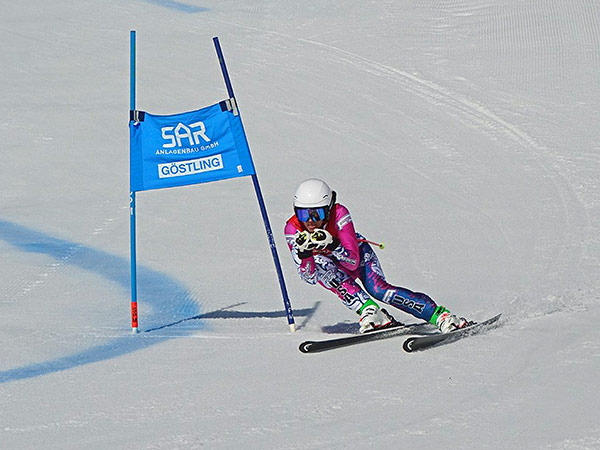
As masters ski racers, we like to watch World Cup athletes as examples of how to do our sport, but there’s one aspect of ski racing where following their lead will not help you ski your fastest, the skis you choose. Elite-level athletes are stronger and race at faster speeds than the rest of us, even the fastest masters racers. They can bend beefier boards, and need that extra “beef” to absorb the excessive vibrations that those faster speeds on hard, rough surfaces cause. Which isn’t to say masters racers should be on wimpy gear. Hardly. “Detuned” beer league skis and other “carving skis” with a tight radius might not be the best choice either. Manufacturers have caught on and now offer a slew of race ski models, some targeted specifically at masters-level competition. What’s more, race skis are among the most expensive models on the market, but unlike free-skiing skis that you can try at a demo day or borrow from a ski shop, the opportunities to test race skis before you buy them are very limited. Here are some guidelines to help you make the right choice:

Length, Sidecut, Construction
There are three main things to consider when selecting skis for any ski racing discipline: 1. length, 2. sidecut (radius), and 3. construction. Except for the fact that radius tends to increase as a particular ski model gets longer, these three factors are largely independent of each other. Some long skis have a tighter radius than others. A long ski might be softer flexing than a short ski, or not. There’s a lot of variation. In general, these are the basic principles of ski design that affect how they feel underfoot:
- The longer the ski, the more stable it feels as your speed picks up because there’s more material to absorb vibration. That’s why super G skis are longer than giant slalom skis, which are longer than slalom skis. In masters racing, Super G speeds can exceed 60 miles per hour. GS speeds are rarely faster than 40 miles per hour, and slalom typically tops out at 20 miles per hour.
- The longer the ski, the less agile they feel, another reason why slalom skis are so much shorter than GS and super G skis.
- Don’t sweat a centimeter or two in ski length. For example, if you are looking for a 180-centimeter GS ski, but a particular brand has a 182 instead, if the radii and the constructions are comparable, they are basically the same ski length.
- The tighter the radius of a ski, the tighter the turn it can cleanly carve. Slalom turns are the shortest (tightest) turns in ski racing, which is why slalom skis have the smallest sidecuts.
- The wider the radius of a ski, the higher you need to start your turn above each gate.
- The more metal in a ski, the stabler it feels as your speed increases, but also the less quick (springy) it feels to turn. That’s why Super G skis feel smooth and heavy, the luxury SUVs of masters ski racing, compared a lively slalom ski.
- The softer the ski, the easier it is to turn, but if it’s too soft, it won’t provide a confident platform underfoot, and it might not hold well when conditions are firm. The heavier and stronger you are, the easier you can bend a ski to make it carve and give you energy (rebound) in each turn. You probably need a beefier ski that won’t mush out.
- The stiffer the ski, the harder it is to bend underfoot as you turn, and the higher the line you’ll need to take in a course.
- The taller you are, the more leverage you have over your skis, i.e., the easier it is for you get pressure to the tip of the ski at the top of each turn, allowing you to ski a longer ski.
- Weight is a ski design benchmark for race skis. Regardless of the discipline and your age, if you weigh less than 120 pounds, you are considered the size of a U14 to U16 junior racer and should probably be on a “junior” or “tweener” race ski. If you are 120 to 160 pounds, you should be on a “woman’s” race ski, whether you are a male or female. Women who are heavier that 160 pounds should also be on a “woman’s” ski, unless you’ve got Lindsay Vonn’s strength and ability. If you’re over 160 pounds and a man, you should be on a “unisex” or “men’s” race ski, which are the same thing.
- Age matters, too. As masters racers hit their 70’s and older, strength and agility wane. Older racers tend to favor shorter ski lengths and tighter in ski radii, which tend be more forgiving turn for turn.
It’s important to know how each of these design elements affect the performance of a ski for you, which might be different than for your buddy. No two ski racers, even of similar abilities, have exactly the same height, weight, strength, and agility-level, or ski exactly the same way. In addition, the ski options for each discipline of racing have their tradeoffs. Let’s get more specific by discipline:
Slalom Skis
Slalom skis come in three standard “World Cup” lengths for adult ski racers, 155cm, 157cm-158cm (depending on the brand), and 165cm. All slalom skis have a radius around 12 meters, so there isn’t much discussion about that, but there are some things worth talking about regarding ski length.
Among masters racers, the younger, bigger, faster men opt for 165’s. The longer length gives them more tail if they get thrown back in a course, so a better chance of recovery, and more stability. Likewise, that 165 is a lot of ski (maybe too much ski) for a lighter weight and/or older guy. The trend in masters racing for men is toward the 157cm slalom ski, commonly called the “women’s world cup length.”
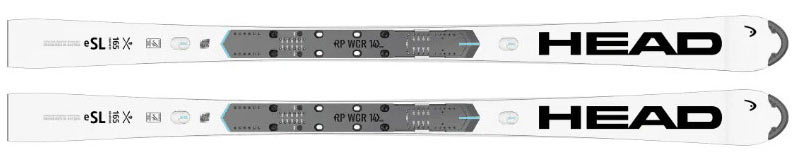
155’s and 157’s are both considered “women’s skis,” though there’s nothing women’s specific about them beyond a person’s weight. The main difference is their construction. 157’s typically have an extra sheet of metal inside them. They are beefier feeling (but not as beefy as 165’s). The strongest female masters racers, especially heavier, younger women, experienced but lighter men, and experienced older men gravitate to this length.
Lighter, less experienced, less physically fit female masters racers and older, lighter racers of both sexes are typically happiest on 155’s. This is considered a junior or tweener slalom ski. It has a little less metal inside it, so it feels lighter and more responsive, but it has the same plate under the binding as other World Cup slalom skis, so it can still handle the demands of a slalom course.
Some ski companies now make a 160cm slalom ski to appeal to guys who want something slightly shorter than a 165. Be careful. These are typically a “detuned” version of a World Cup ski, more for recreational ski racing, due to their construction and/or the plate.
Older, shorter, lighter women–in their 70’s and older, and under 120 pounds–even top athletes in their age group, favor a junior ski that’s 145cm to 150cm. Anything longer, and thus beefier, is too much ski for them.
Giant Slalom Skis
Length and radius are important considerations when selection GS ski for masters racing, and the best choices are typically NOT made for NASTAR or beer league racing. Here are the benchmarks for masters GS skis. As with slalom skis, the bigger, stronger, and more skilled the racer, the longer the ski they should be on:
Length for most women masters: 176cm – 182cm
Length for most men masters: 178cm – 186cm
Radius for all masters racers: 18m–26m, though 21m-25m is the sweet spot.
Some masters racer err on the side of a tighter-radius skis, thinking, “If I get late or low, I have a better chance of recovery.” That’s true, but you give up the ability to ski arc to arc, accelerating through the transition toward the next one. You might make great turns, but they’re too tight, causing you to pause noticeably until you’re at the right the spot to start the next turn. Consider the distance between the gates (which equates to the radius of the average turn on a course) as a clue to the radius of ski you should be on. For example, the gates of an average masters GS course are typically set between 25 meter and 27 meters apart. A ski that has a slight tighter radius, between 21m and 25m give you some margin for recovery and more comfort if the course has a lot of offset, but still allows you to connect your turns.
Super G Skis
Vibration control vs turnability
If I’m new to ski racing, can I try it on my free-skiing skis?
When should I get new skis?
What are the rules?
There is one more important reason why masters racers are on different skis than World Cup racers–the rules! World Cup racers must ski on GS skis that are 190 centimeters in length (+/- 2 centimeters) with a minimum 30-meter radius. For super G, skis must be ______ long with a 40-meter radius. In masters ski racing, the rules for gear are less precise. In general, your skis must be appropriate for the race. In other words, if you show up a super G on slalom skis, you probably won’t be allowed in the starting gate for safety reasons. GS skis are legal, just slower, because you’ll get rattled around a lot more.
I suppose you could try to ski a slalom on your super G skis. You might finish, but you’ll have to work three times harder than everyone else to go a third as fast. Having the right skis for the task makes ski racing a lot more fun, and a lot faster!
Got questions or more to add?